
Size
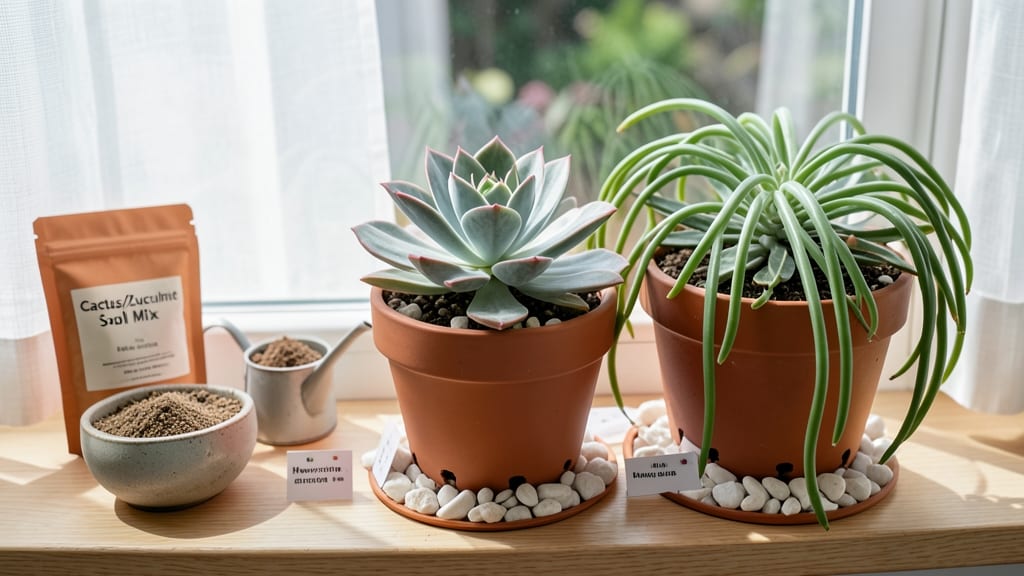
Growing succulent plants indoors turns even the gloomiest apartment into a sunlit desert oasis. 🌵 The key isn’t just picking the right plants—it’s creating the perfect microclimate where they thrive without wilting or rotting.
I’ve turned my own collection from sad, leggy survivors into vibrant, bushy plants that bloom year after year, and you can too. Start with the right setup: shallow pots with drainage holes, a gritty soil mix, and a sunny windowsill (or grow light).
Most people overwater, but succulents store moisture in their leaves—so let the soil dry completely between waterings. A spray bottle for occasional misting keeps humidity just right without drowning roots. By month three, you’ll have lush, compact plants that multiply effortlessly.
My haworthias now send out baby pups every spring, and my echeverias bloom with pink flowers that last for weeks. The best part? These plants clean the air while adding a touch of desert magic to any room.
Works for any space—from bright kitchens to dim offices—with just a few adjustments. Let’s get those roots growing!
📚 In This Guide
- What you need
- Instructions
- Tips and common mistakes
- Wrapping up and next steps
What you need
- ● Succulent plants: 1-5 (choose varieties like Haworthia, Echeveria, or Sedum for beginners).
- ● Containers: 1-3 pots with drainage holes (terracotta, ceramic, or plastic; 4-6 inches in diameter).
- ● Well-draining soil: 1-2 bags of cactus/succulent mix (or DIY: 50% potting soil + 50% perlite/pumice).
- ● Gravel or pebbles: Small bag (for layering at the bottom of pots for drainage).
- ● Watering can or spray bottle: 1 (with a narrow spout for precision).
- ○ Fertilizer (optional but helpful): 1 bottle of balanced liquid fertilizer (diluted to half-strength, e.g., 10-10-10 or succulent-specific).
- ● Bright light source: South-facing window, grow lights, or a sunny spot (6+ hours of light daily).
- ● Decorative pots: Outer pots without drainage holes (for aesthetics; place over inner pots).
- ● Plant labels: 1 pack (to track varieties and care needs).
- ● Humidity tray: 1 (for tropical succulents like Haworthia or Gasteria).
- ● Pruning shears: 1 pair (for propagating or trimming overgrowth).
- ● Plant food: 1 packet of worm castings or fish emulsion (for occasional feeding).
Step-by-step instructions for growing succulent plants indoors
Here’s how to keep your succulents happy and thriving—no green thumb required.
🪴 Step 1: Choose the Right Containers and Soil
Succulents hate soggy roots, so pick containers with drainage holes—terracotta pots or ceramic with holes work best. I like shallow pots because they dry out faster and mimic their desert origins. Skip the fancy decorative pots without drainage unless you’re willing to water like a surgeon.
Use a cactus/succulent-specific mix (never regular potting soil—it stays too wet). If you’re mixing your own, blend 50% potting soil with 50% perlite or coarse sand for that perfect gritty texture. Tap the pot gently after filling to settle the soil without packing it down.
🌱 Step 2: Plant Your Succulents Correctly
Wait until you’ve got 4-6 healthy succulents before planting (since this makes 4 plants). Dig a hole just deep enough to bury the base of the plant—no deeper than the soil line it grew at in its nursery pot. Press the soil lightly around the roots to secure it, but don’t pack it tight.
Space plants 2-3 inches apart in the pot. Crowding leads to competition for light and water, which stresses them out. If you’re planting multiple varieties, group similar-sized ones together so they grow at the same rate. Water lightly right after planting to help settle the soil.
☀️ Step 3: Place in Bright, Indirect Light
Succulents need 4-6 hours of bright, indirect light daily—a south or east-facing window is ideal. If your space is dim, supplement with a grow light kept 6-12 inches away for 12-14 hours a day. Too little light? You’ll see leggy, stretched-out stems reaching for the sun.
Watch for sunburn (white or yellow patches) if placing near a window. Start with 2-3 hours of morning sun and gradually increase exposure. Rotate the pot a quarter turn weekly so all sides get even light—this keeps plants growing straight and balanced.
💧 Step 4: Water Like a Pro (Less Is More)
Water only when the top inch of soil feels completely dry—stick your finger in to check. Overwatering is the #1 killer of indoor succulents, so I err on the side of underwatering. When you water, soak thoroughly until water runs out the drainage holes, then empty the saucer to prevent root rot.
In winter, cut back to every 3-4 weeks—succulents grow slower and need less water. If leaves start wrinkling or puckering, it’s a sign of thirst. If they turn mushy or translucent, you’ve overdone it. Adjust your schedule based on what you see.
✂️ Step 5: Prune and Propagate for Fullness
When stems get leggy or bare at the base, snip just above a leaf node with clean scissors. These cuttings root easily in water or soil—place them in a shallow dish of water (change weekly) or stick them in damp soil until they sprout roots in 2-4 weeks.
Remove dead leaves or yellowing ones by twisting gently—no need for pruners. This keeps your plants looking tidy and encourages new growth. If a succulent outgrows its pot, repot in spring or early summer when it’s actively growing. Choose a pot just 1 inch wider than the current one.
Tips & tricks for thriving indoor succulents
Here's what nobody tells you—these small details make all the difference between happy plants and sad, wilted ones.
Drainage is Non-Negotiable: If your pot doesn't have drainage holes, you're basically setting your succulents up to fail. I've seen people try to "fix" this by adding extra soil or rocks at the bottom—don't bother. The only real solution is to either repot into containers with holes or use self-watering pots specifically designed for succulents. The roots need to breathe, and that means water needs to escape completely.
The Light Factor: Those 4-6 hours of bright, indirect light aren't just about quantity—they're about quality. I've learned the hard way that north-facing windows often don't provide enough light, even if they seem bright. If your succulents start stretching toward the light (a condition called etiolation), it's time to move them closer to the window or invest in a grow light. The 12-14 hours of artificial light should be kept about 6-12 inches away—closer for dimmer spaces, farther for brighter ones.
Soil Mix Matters More Than You Think: That 50% potting soil to 50% perlite or coarse sand ratio isn't arbitrary—it's about creating the perfect balance. Too much regular potting soil holds too much moisture, while too much perlite can make the soil too dry. I like to add a handful of chicken grit to my mix for extra drainage. And here's a pro move: After mixing, let your soil sit for a day before planting. This helps stabilize the moisture content and prevents immediate overwatering.
Watering Wisdom: The "top inch dry" rule is your golden standard, but there's more to it. I've found that checking soil moisture in the morning gives the most accurate reading—afternoon heat can make the surface appear dry when it's not. Also, pay attention to the weight of your pot: a properly drained pot should feel noticeably lighter when it's time to water. And that weekly water change for cuttings? Don't skip it—stagnant water breeds bacteria that can rot your new plants before they even take root.
Pro Tips for Grow Succulent Plants Indoors
- Here's what nobody tells you—these small details make all the difference between happy plants and sad, wilted ones.
- Drainage is Non-Negotiable: If your pot doesn't have drainage holes, you're basically setting your succulents up to f...
- The Light Factor: Those 4-6 hours of bright, indirect light aren't just about quantity—they're about quality. I've le...
Frequently asked questions
Got questions? You’re not alone—growing succulents indoors is easy once you know the tricks! Here are answers to the most common queries to keep your green friends happy and thriving.
How much sunlight do indoor succulents really need?
Succulents crave bright, indirect light (4–6 hours daily). A south- or west-facing window is ideal, but if that’s not an option, a grow light (LED or fluorescent) works wonders. Pro tip: Rotate pots weekly for even growth—no leggy stretchy stems!
Why are my succulents turning mushy or yellow?
Overwatering is the #1 killer! Succulents store water in their leaves, so let soil dry completely between waterings (usually every 2–3 weeks). Yellow/mushy leaves = too much H₂O. Fix it: Trim the sad parts, repot in fresh, well-draining soil, and water sparingly.
Can I grow succulents in small pots or even teacups?
Succulents thrive in small containers (as long as they have drainage holes). Teacups, terrariums, or even repurposed jars work—just ensure the soil dries out fast. Bonus: Tiny pots = less water needed! Warning: Avoid glass without drainage (root rot risk).
How long does it take for succulents to grow indoors?
Growth speed varies by type, but most succulents grow 1–3 inches per year indoors. Patience is key! Speed it up: Fertilize lightly (diluted succulent food) in spring/summer, and give them a sunny spot. Some varieties (like echeverias) may bloom in 1–2 years with proper care!
What’s the easiest succulent for beginners?
Start with haworthias or jade plants—they’re forgiving and slow-growing. Other top picks:
- Snake plant (Sansevieria): Nearly indestructible!
- Zebra plant (Haworthia attenuata): Striped and sturdy.
- Aloe vera: Medicinal + low-maintenance.
All three tolerate less light and infrequent watering—perfect for newbies!
How do I propagate succulents without killing them?
Snip a healthy leaf or cutting, let it callus for 1–3 days (place cut-side down on dry paper), then plant in well-draining soil. Water lightly until roots form (4–6 weeks). Pro move: Use a tray with perlite to keep humidity up while propagating!
Wrapping up and next steps
Growing succulents indoors is easier than you think—just embrace their low-maintenance charm and give them the right care! With the perfect pot, soil, light, and a little patience, you’ll soon enjoy a lush, thriving green corner that’s as rewarding as it is stylish. 🌱✨
Ready to take the next step? Start small with one or two varieties, experiment with placement, and watch your confidence (and plant collection!) grow. Happy gardening—your future succulent jungle awaits! 🌿💚