
Container Gardens
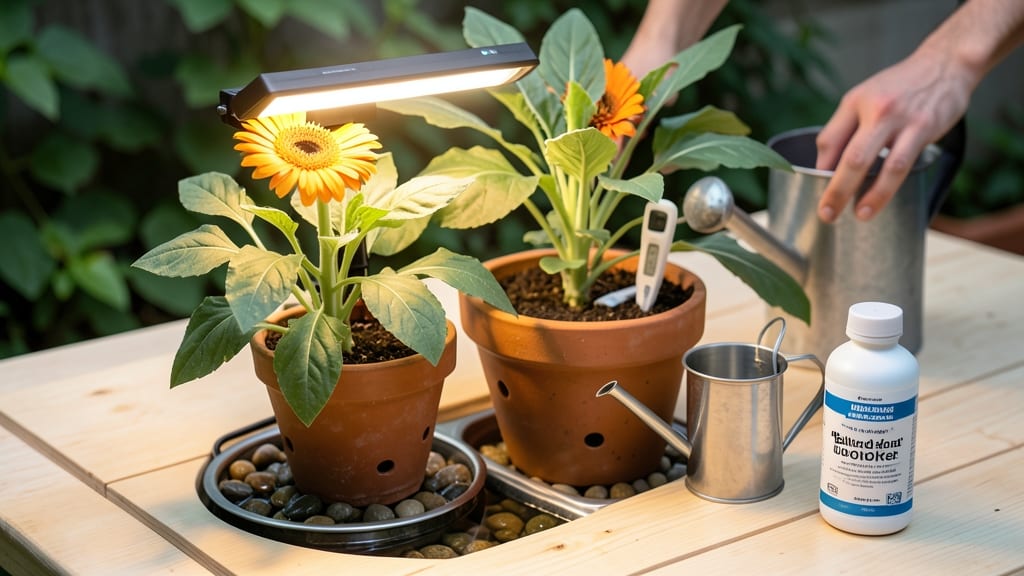
Gerbera daisy care indoors requires bright light—not just any light, but the kind that mimics their sunny South African homeland. 🌞 I’ve kept these vibrant bloomers thriving in my living room for years, and the secret isn’t complicated: it’s all about positioning, timing, and a little extra attention to their roots. Most people overlook how much light these daisies truly crave, leading to leggy stems and sparse flowers.
The first trick is placing them within 6 inches of a south-facing window—or under grow lights for 12-14 hours daily. Without enough light, gerberas stretch toward windows like sun-starved teenagers, and their blooms shrink to sad little things.
The second trick? Rotate your pot quarter-turns weekly so all sides get equal exposure. This keeps the stems sturdy and the flowers popping with color.
By mastering these light tricks, you’ll see bold, dinner-plate-sized blooms that last for weeks—far more impressive than the wimpy store-bought versions. The payoff isn’t just pretty flowers; it’s a plant that rewards your effort with nonstop color from spring through fall.
And the best part? You’ll skip the guesswork on watering and feeding once you’ve got the light right.
Whether you’re dealing with a dim apartment or a bright conservatory, these same principles apply. The key is consistency—gerberas are forgiving once you meet their basic needs, and they’ll bloom like crazy as long as you keep them happy. Let’s get those petals popping!
📚 In This Guide
- What you need
- Instructions
- Tips and common mistakes
- Wrapping up and next steps
What you need
- ● Gerbera Daisy Plant: 1 healthy potted gerbera daisy (choose a variety like Gerbera jamesonii for indoor suitability)
- ○ Optional: Pre-blooming plant for instant color!
- ● Pot & Drainage: 1 container (6–8 inches in diameter) with drainage holes (terracotta or ceramic preferred)
- ○ Optional: Cache pot or decorative outer pot for aesthetics
- ● Well-Draining Soil: 1 bag of light, airy potting mix (e.g., 50/50 blend of peat moss and perlite or cactus/succulent mix)
- ○ Optional: Add 1 tbsp of orchid bark or perlite for extra drainage
- ● Lighting: 1 grow light (LED or fluorescent, 12–16 inches above plant) OR a south-facing window with bright, indirect light
- ○ Optional: Timer for grow light (12–14 hours/day)
- ● Watering Supplies: 1 watering can with a narrow spout (or a spray bottle for misting)
- ○ 1 moisture meter (optional but helpful for monitoring soil)
- ● Fertilizer: 1 bottle of balanced liquid fertilizer (10-10-10 or 20-20-20, diluted to half-strength)
- ○ Optional: Slow-release granular fertilizer (follow package instructions)
- ● Pruning Tools: 1 pair of clean, sharp scissors or pruning shears
- ○ Optional: Rubbing alcohol (to sterilize tools between cuts)
- ● 🌡️ Temperature Check: Keep your space between 60–75°F (15–24°C)—gerberas hate drafts!
- ● ✨ Humidity Helper: Place the pot on a pebble tray with water to boost humidity (especially in dry climates).
- ● 🎯 Bloom Boost: Deadhead spent blooms weekly to encourage new flowers!
Step-by-Step gerbera daisy care indoors
Here's how I keep my gerberas blooming vibrantly indoors—no greenhouse needed.
🌱 Step 1: Position for Maximum Bright Light
Gerberas demand 6+ hours of direct sunlight daily, so place them within 12 inches of a south-facing window. East or west exposures work too, but supplement with a grow light if blooms fade or stretch. I notice the petals darken when light is insufficient—your gerbera will too.
Rotate the pot quarter-turn weekly so all sides receive even light exposure. You'll see fuller, more symmetrical blooms within a month. Avoid deep shade—gerberas won't rebloom without it.
💧 Step 2: Water Deeply at Soil Level
Water when the top 1-2 inches of soil feel dry, using room-temperature water. I pour slowly at the base until water runs from the drainage hole—this prevents soggy centers that rot roots. Never let the pot sit in saucers of water longer than 15 minutes.
Gerberas hate wet foliage, so water only at the soil line. Yellowing leaves often signal overwatering, while crispy edges mean underwatering. Adjust your schedule based on humidity—dry indoor air means more frequent watering.
✂️ Step 3: Deadhead and Prune for Continuous Blooms
Cut spent blooms back to the nearest leaf node with clean sterilized scissors to encourage new growth. I deadhead every 2-3 days during peak bloom season—this prevents seed formation and redirects energy to fresh flowers. Wear gloves; gerbera sap can irritate skin.
Trim leggy stems to half their length if they exceed 12 inches. This promotes bushier growth. Avoid heavy pruning mid-season—wait until after the first major bloom cycle to reshape the plant.
☀️ Step 4: Maintain Ideal Temperature and Humidity
Keep gerberas in 65-75°F environments during the day, with nighttime temps no lower than 55°F. Drafts from AC vents or heaters cause buds to drop. I place mine on a stable table away from doors and windows.
Boost humidity to 40-50% by grouping plants together or using a pebble tray with water beneath the pot. Mist leaves lightly in the morning—avoid evening misting to prevent fungal issues. Watch for curled leaves; this often signals low humidity.
🪴 Step 5: Fertilize Lightly During Active Growth
Feed every 4-6 weeks during spring and summer with a balanced liquid fertilizer (10-10-10) diluted to half-strength. I apply it after watering to prevent root burn. Stop fertilizing in fall and winter when growth slows.
Over-fertilizing causes salt buildup—flush the soil every 3 months by watering thoroughly with plain water. Yellowing between veins signals excess nutrients. Always follow label instructions for application rates.
Tips & tricks for perfect indoor gerbera daisy care
Here's what nobody tells you about keeping gerberas thriving indoors—these tricks make all the difference.
Light Optimization: If your south-facing window doesn't provide enough light, supplement with a full-spectrum LED grow light placed 6-12 inches above the plant for 12-14 hours daily. I use a timer to automate this—gerberas need consistency. Watch for petals that lose their vibrant color; this is your first sign of insufficient light.
Root Health Secret: In Step 2, when watering, let the plant sit in its saucer for exactly 15 minutes after drainage—this ensures excess water doesn't pool at the roots. I've found that adding a layer of pebbles to the saucer creates natural drainage while maintaining humidity around the base. This two-step system prevents both overwatering and root rot.
Pruning Precision: For Step 3, when deadheading, make your cuts at a 45-degree angle just above a leaf node. This angled cut prevents water from pooling on the stem, reducing fungal risks. I sterilize my scissors between cuts with rubbing alcohol—this keeps infections at bay during peak bloom season when you're deadheading every 2-3 days.
Temperature Troubleshooting: Maintain the 65-75°F daytime range by avoiding direct AC vents or heaters. I place my gerberas on a stable table away from doors—temperature fluctuations cause buds to drop prematurely. In winter, if your home drops below 55°F at night, move the plant to a warmer room or use a small space heater with a thermostat to maintain consistency.
Pro Tips for Gerbera Daisy Care Indoors
- Here's what nobody tells you about keeping gerberas thriving indoors—these tricks make all the difference.
- Light Optimization: If your south-facing window doesn't provide enough light, supplement with a full-spectrum LED gro...
- Root Health Secret: In Step 2, when watering, let the plant sit in its saucer for exactly 15 minutes after drainage—t...
Frequently asked questions
Got questions about keeping your gerbera daisies thriving indoors?
Here are some of the most common concerns—and their simple solutions!
How often should I water my indoor gerbera daisies?
Water your gerberas when the top 1-2 inches of soil feel dry—usually every 5-7 days, depending on humidity and light. Overwatering is a common killer, so always use a pot with drainage holes and avoid soggy soil. Pro tip: Check soil moisture with your finger before watering!
Why are my gerbera daisy leaves turning yellow?
Yellow leaves often signal overwatering or poor drainage. Ensure your pot has drainage holes and reduce watering slightly. If the yellowing starts at the bottom, it could also mean nutrient deficiency—try a balanced liquid fertilizer every 4-6 weeks. Fix: Trim yellowed leaves to encourage new growth!
Can gerbera daisies survive without direct sunlight?
While they love bright, indirect light, gerberas can struggle in low-light spots. If your space lacks sunlight, supplement with a grow light (12-14 hours/day) or place them near a south- or west-facing window. Without enough light, blooms will fade, and leaves may stretch weakly.
What’s the best temperature range for indoor gerbera daisies?
Keep your gerberas cozy in 60–75°F (15–24°C) during the day and avoid drafts or sudden temperature drops. They’re sensitive to cold—never let them sit below 50°F (10°C)—or they’ll drop buds and wilt. A warm, consistent environment (like a sunny kitchen or living room) works best!
How do I encourage more blooms on my gerbera daisy?
To trigger continuous blooming, deadhead spent flowers regularly and fertilize lightly every 2-3 weeks with a low-phosphorus bloom booster (like 10-10-10). Also, ensure they get 6+ hours of bright light daily—without it, your plant will focus on leaves over flowers!
Wrapping up and next steps
Caring for gerbera daisies indoors doesn’t have to be complicated—just bright light, consistent water, and a little TLC will keep those vibrant blooms thriving! 🌸 With the right placement (like near a sunny window or under grow lights) and a few simple adjustments, you’ll enjoy a burst of color year-round.
Ready to see your gerberas flourish? Start by picking your spot today and watch your indoor garden bloom with confidence!