
Advice
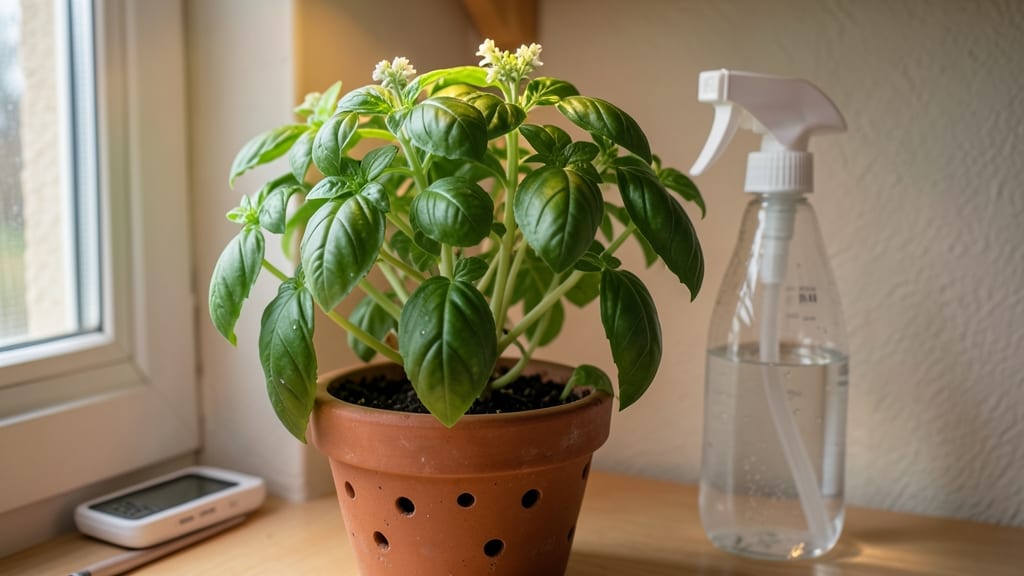
Yes, basil can survive winter indoors with proper care: place it in a bright, south-facing window, keep temperatures between 60-70°F, and trim back stems regularly to maintain growth while preventing overwatering or cold drafts.
Basil thrives indoors during winter when you mimic its natural growing conditions—bright light is the biggest challenge since indoor winter light lacks the full spectrum basil needs. 🌱 I’ve found that supplementing with a grow light for 12-14 hours a day can make all the difference, especially in northern climates.
The key is balancing moisture levels; basil hates soggy roots but also needs consistent dampness, so I water only when the top inch of soil feels dry. A humidity tray underneath the pot helps prevent the crispy edges that signal stress.
Don’t overlook temperature fluctuations—drafty windows or heat vents can shock your plant, causing leaves to yellow or drop. If your home runs dry in winter, consider a small pebble tray with water near the plant to boost humidity without overwatering.
The pruning step in the quick answer isn’t just about aesthetics; it encourages bushier growth by signaling the plant to focus energy on new stems rather than just height.
💡 In This Article
- Indoor Winter Survival Conditions for Basil Plants
- Step-by-Step Guide to Overwintering Basil Indoors
Indoor winter survival conditions for basil plants
Basil’s ability to survive winter indoors hinges on replicating its natural Mediterranean climate, where it thrives under 12-16 hours of full-spectrum sunlight daily. Indoors, this becomes tricky because standard indoor lighting lacks the blue light spectrum (400-500nm) that basil needs for photosynthesis and growth hormone production.
Without enough blue light, plants stretch toward light sources (etiolation), producing long, weak stems with pale leaves. This is why a south-facing window might not be enough—especially in cloudy winter months when sunlight intensity drops by 30-50% compared to summer.
The temperature range of 60-70°F isn’t just arbitrary—it mirrors the ideal growing zone for basil. Below 55°F, the plant’s metabolic processes slow dramatically, causing stunted growth and increased susceptibility to fungal diseases like powdery mildew.
Above 75°F, while comfortable for us, can stress basil by accelerating transpiration (water loss through leaves), which is why you’ll often see crispy leaf edges in overheated rooms.
Humidity plays a critical role too; basil prefers 50-70% relative humidity, but most homes drop to 20-30% in winter due to indoor heating, leading to brown leaf tips—a classic sign of dehydration stress.
Root health suffers when these conditions aren’t met. Basil has a shallow root system that thrives in well-draining soil with 60-70% moisture content. Overwatering in winter is a common mistake because cooler temperatures slow evaporation, making the soil stay damp longer.
This creates anaerobic conditions in the roots, where beneficial microbes can’t function, leading to root rot. The key is to check soil moisture with your finger—only water when the top 1 inch feels dry.
A moisture meter can help, but even these can be tricky since basil’s roots prefer slightly drier conditions than many houseplants.
Pruning isn’t just about keeping your basil looking neat—it’s a survival tactic. When you trim back stems by 1/3 their length, you stimulate the production of auxin, a plant hormone that promotes lateral branching. This bushier growth means more leaves for photosynthesis and better air circulation, reducing disease risk.
The best time to prune is in the morning when the stomata (leaf pores) are open, allowing the plant to recover faster. Avoid cutting into the woody stems at the base, as this can introduce pathogens and stress the plant.
Light quality matters just as much as quantity. While a sunny window provides some benefits, it often lacks the red light spectrum (600-700nm) needed for flowering and fruiting—though basil is an herb, not a flowering plant, so we focus on the blue spectrum.
A simple LED grow light with a 6500K color temperature (cool white) can supplement natural light, placed 6-12 inches above the plant for 12-14 hours daily. The light should be on a timer to mimic natural daylight cycles, which helps regulate the plant’s circadian rhythm and prevents leggy growth.
One often-overlooked factor is air circulation. Basil needs gentle airflow to prevent fungal spores from settling on its leaves. A small oscillating fan on low speed (1 mph) near the plant can improve growth without causing stress.
Just avoid drafts from heating vents or open windows, which can cause sudden temperature swings. These fluctuations disrupt the plant’s ability to regulate water uptake, leading to wilting or leaf drop. 🌿
Finally, consider the container. Basil roots grow quickly and can become root-bound in small pots, which stresses the plant. If you’re repotting, choose a container that’s only 1-2 inches larger in diameter than the current one—too much space leads to overwatering issues.
Ensure the pot has drainage holes to prevent waterlogging, and use a well-draining potting mix designed for herbs. A mix with 50% peat or coconut coir, 30% perlite, and 20% compost works well, as it balances moisture retention with aeration.